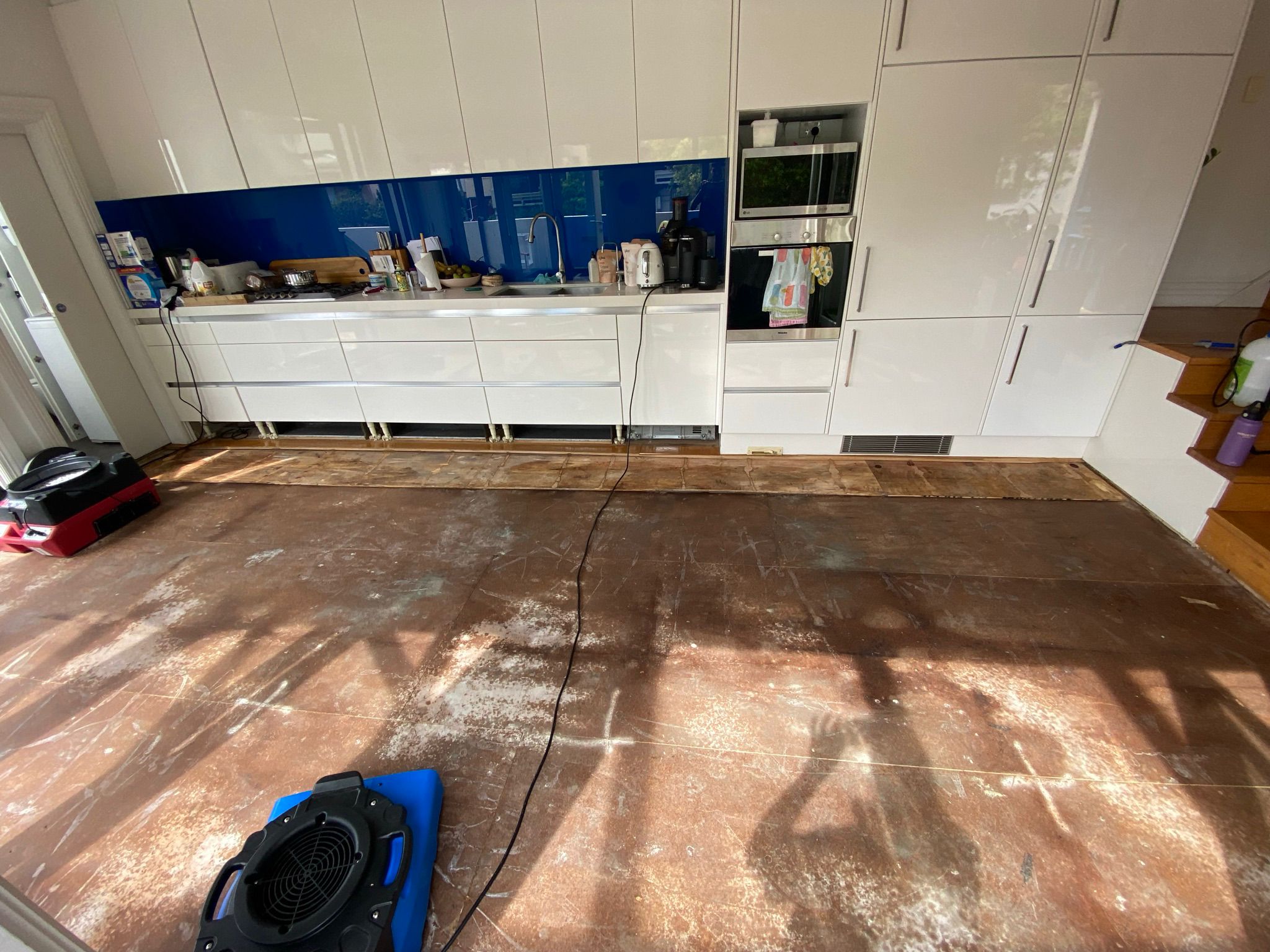
If your home has water damage, acting quickly can make a major difference to both the cost and the outcome. Whether the problem comes from a burst pipe, leaking roof, appliance failure or stormwater ingress, the first few steps are usually the most important.
For homeowners across Sydney and Western Sydney, the goal is simple: make the area safe, stop the water source if possible and begin limiting further damage as quickly as you can.
1. Stop the water source if it is safe to do so
If the issue is a burst pipe, overflowing fixture, leaking appliance or another internal source, the first step is to stop more water from entering the area. This might mean turning off a tap, shutting off a supply line or isolating part of the home’s plumbing.
If the source is storm-related or the cause is not immediately obvious, focus on safety and move to the next step.
2. Make the area safe
Water damage can create slip hazards and may affect electrical appliances, power outlets or other safety-critical areas. If there is any risk around electricity, avoid entering the area until it is safe to do so. Where needed, contact the appropriate trades or emergency support first.
Do not move heavy soaked materials or attempt large clean-up work if there is any risk of injury or contamination.
3. Remove excess water if it is minor and safe
For a very small incident, you may be able to mop or blot up surface water while waiting for help. But once carpet, underlay, flooring, cabinetry or skirting are affected, the issue can move beyond what surface clean-up alone can fix.
Water can travel surprisingly fast into surrounding materials. This is why many Sydney homeowners call for Emergency Water Extraction once the affected area is more than minor.
4. Move smaller belongings out of the way
If it is safe, lift smaller items off the floor and move them to a dry area. Rugs, electronics, boxes, personal items and soft furnishings are often better protected when moved early.
Try not to drag soaked items across other dry areas, as this can spread the problem further through the property.
5. Start ventilation if appropriate
Opening windows or improving airflow can sometimes help, but ventilation alone is not a replacement for proper drying when carpet, underlay, flooring or wall materials are affected. In many cases, professional airflow and dehumidification are needed to remove deeper moisture.
6. Call early if carpet, walls or flooring are involved
Once water has soaked into carpet, underlay, timber flooring, plasterboard or cabinetry, the drying process usually needs to be more structured. Delays raise the risk of odours, swelling, mould and more expensive repair work.
If you already notice damp smells, visible growth or long-term moisture, our Mould Removal & Remediation page may also be relevant.
7. Take photos for insurance records
If the damage may involve an insurance claim, clear photos and a record of what was affected can be helpful. In many Sydney and Western Sydney jobs, this is one of the first things property owners want to know about after the emergency response has started.
Photograph the affected rooms, flooring, visible damage and any belongings that may be involved in the claim.
8. Do not assume the area is dry just because it looks better
A common mistake after home water damage is assuming the job is finished once the visible water is gone. In reality, moisture can remain trapped in the carpet, underlay, skirting, cabinetry or floor structure.
That is why moisture testing and a proper drying plan can matter so much, especially in bedrooms, living rooms, kitchens and hallways.
FAQ
Should I rip up the carpet myself?
Only if you have been advised to do so and it is safe. In many cases, it is better to assess the situation first so the drying plan is based on what is actually affected.
Can I just use household fans?
Household fans may improve airflow a little, but they usually do not replace professional extraction, air movers and dehumidifiers when deeper moisture is involved.
What if the water damage happened overnight?
Call as early as possible. The sooner extraction and drying start, the better the chance of limiting further damage and mould growth.
Do apartments and units need a different response?
Apartments can need extra attention because water may travel into neighbouring rooms or levels. Fast communication and drying are especially important.
Final word
After water damage in your home, speed matters. Make the area safe, stop the source if possible and get the drying process started quickly. For many Sydney and Western Sydney homes, fast extraction and drying can be the difference between a manageable job and a much larger repair.
Emergency Water Extraction · Mould Remediation · Wet Carpet Drying · Flood & Water Damage