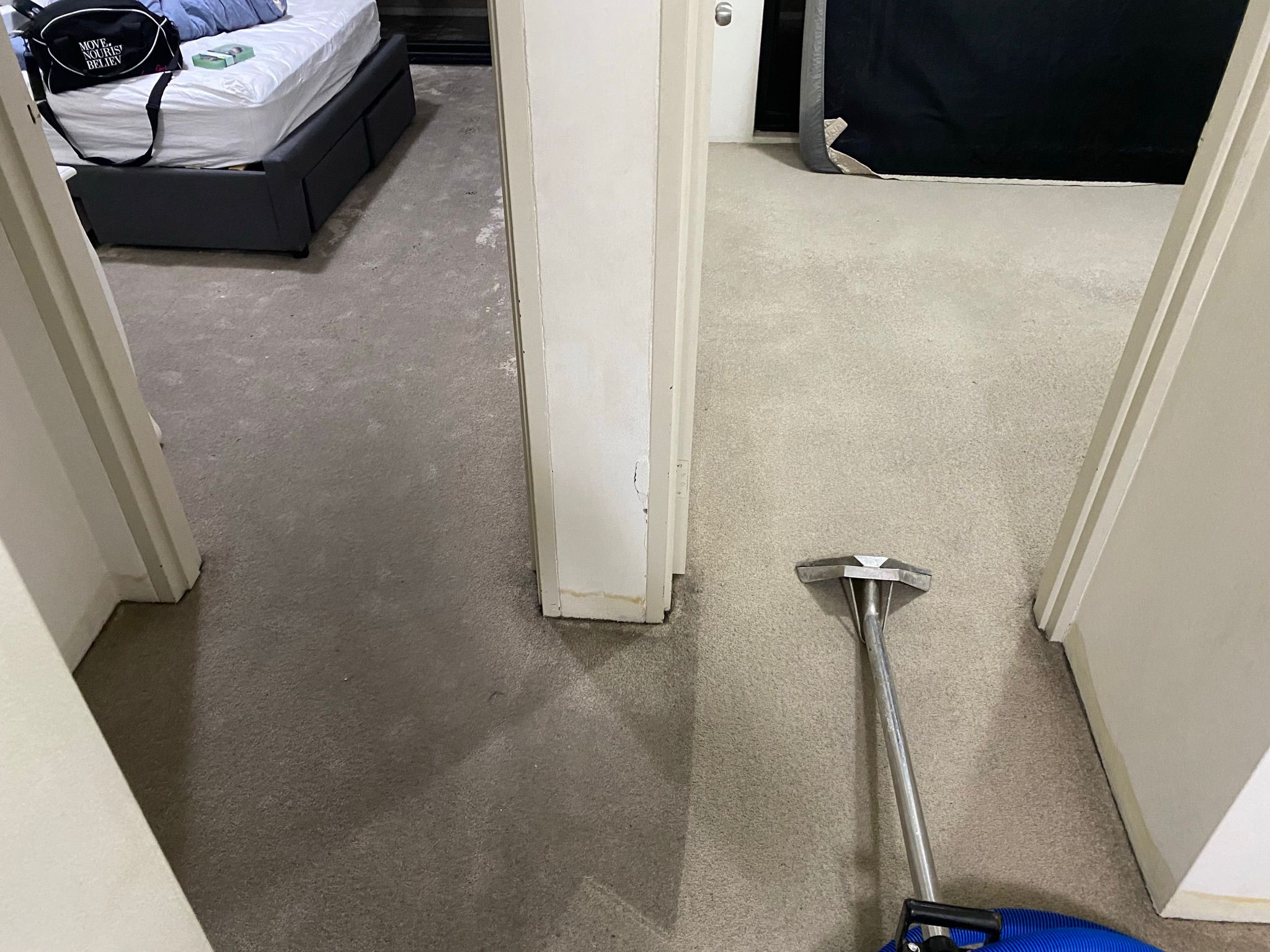
In many cases, wet carpet can be saved after flooding if the response is fast and the drying process is handled properly. The longer carpet and underlay stay wet, the more likely it is that odours, mould, staining or material loss will follow.
That is why wet carpet drying is one of the most common emergency services after a burst pipe, roof leak, overflow or stormwater incident in Sydney and Western Sydney homes.
What determines whether carpet can be saved?
Several factors influence whether wet carpet can be restored:
- How long the carpet has been wet.
- How much water entered the area.
- Whether the water was clean or contaminated.
- Whether the underlay is saturated.
- Whether moisture has spread into skirting or surrounding materials.
Where the incident involves clean water and the response is quick, the chances of saving the carpet are often much better. Where there is contamination or long delays, replacement may become more likely.
Why the underlay matters
People often focus on the surface of the carpet, but the underlay underneath can hold a surprising amount of water. Even when the top of the carpet begins to look better, moisture may still remain trapped below.
If that moisture is not removed properly, it can lead to odours, mould risk and a carpet that never fully feels dry again. This is one reason professional extraction and drying are often needed instead of surface drying alone.
Fast extraction makes a big difference
Early extraction helps remove standing or absorbed water before it has more time to spread. This can improve the chance of saving both the carpet and nearby materials such as skirting boards, door frames and adjoining floors.
For Sydney bedrooms, living rooms, hallways and office carpets, the first response can affect whether the job stays manageable or becomes more expensive over time.
If the incident is active right now, our Emergency Water Extraction page explains the first step. If mould has already become a concern, our Mould Removal & Remediation page may also be relevant.
Signs the carpet needs urgent drying
- The carpet feels squelchy or heavily damp underfoot.
- The underlay is obviously wet.
- There is a damp or musty smell.
- Water entered multiple rooms.
- The incident happened hours ago and the area is still wet.
When replacement is more likely
Replacement becomes more likely when the water is contaminated, the delay has been too long, the underlay has remained saturated for an extended period or mould has already started to develop. In those situations, trying to save the carpet may not give the best long-term outcome.
That said, every job is different. A quick assessment usually gives the clearest picture of what can be saved and what is likely to need more extensive work.
Wet carpet in homes, apartments and commercial spaces
Wet carpet is not just a homeowner issue. Apartments, offices and other commercial spaces in Sydney and Western Sydney can all be affected by leaks, overflows and stormwater problems. In busier properties, quick drying is also important because odours, safety issues and disruption can escalate fast.
FAQ
Can wet carpet dry on its own?
Small damp patches may dry over time, but flooded carpet and soaked underlay often need extraction and proper airflow to dry well.
What if the carpet feels dry on top?
The underlay and lower layers may still be wet even if the surface improves. That hidden moisture can still cause problems later.
Does every flooded carpet need to be removed?
No. Many carpets can be saved if the water is clean and the response is quick enough.
How soon should drying start?
As soon as possible. The earlier extraction and drying begin, the better the chance of avoiding odours, mould and material loss.
Final word
Wet carpet can often be saved after flooding, but timing matters. Fast extraction, proper drying and early assessment usually give the best chance of preserving the carpet and reducing the chance of mould or lingering dampness.
Emergency Water Extraction · Mould Remediation · Wet Carpet Drying · Flood & Water Damage